The July 2026 Pharmacy Compounding Advisory Committee meeting dominated peptide coverage for a month — six of seven substances recommended for the Section 503A Bulks List, over the written objection of the FDA’s own review staff. A separate FDA meeting announcement stated that the agency would convene the PCAC again before the end of February 2027, to review five more peptides that were not on the July docket. Those five are LL-37, GHK-Cu, dihexa acetate, Melanotan II, and PEG-MGF.
This article is a plain-English read of what has actually been scheduled, which compounds are in the second tranche and why, what the July meeting suggests about how the next one may go, and — the part most coverage skips — why none of it changes the separate research-use-only framework under which laboratory compounds are supplied. It is educational and regulatory in nature.
Every compound referenced here is discussed strictly in the context of in-vitro and preclinical laboratory research. Nothing below is an efficacy claim, a safety claim, a therapeutic claim, or legal advice.
Section 1 — What Was Actually Scheduled
On April 15, 2026, the FDA updated its list of bulk drug substances nominated for use in compounding under Section 503A and gave notice that, after seven days, it would remove twelve peptide bulk drug substances from Category 2 — the category reserved for substances the agency has determined raise significant safety concerns. The removals took effect on or about April 22–23, 2026. Critically, the removals were triggered by the original nominators withdrawing their nominations, not by any new safety finding in the substances’ favor.
The twelve were BPC-157, LL-37, dihexa, DSIP, epitalon, GHK-Cu (injectable), KPV, PEG-MGF, Melanotan II, MOTS-c, semax, and TB-500.
The FDA announced the July 23–24, 2026 PCAC meeting in a Federal Register notice. Separately, an FDA meeting announcement states that the committee will consider five additional substances before the end of February 2027. These are separate source records, not two meetings announced in the same July notice.
GHK-Cu needs a route-specific reading. The FDA category document updated May 14, 2026 records its April 22 removal from Category 1 after nomination withdrawals. It also records a May 5 clarification retaining the nomination for noninjectable routes, and lists GHK-Cu, except injectable routes of administration, back in Category 1. The April removal alone therefore does not describe the later route-specific position. This category listing is not drug approval.
As of publication, the FDA has not announced a specific date, time, or venue for the second meeting. Under the agency’s normal practice, the date and the written-comment and oral-presentation deadlines are published in a subsequent Federal Register notice. For the July meeting, written comments were due July 9 and requests to present orally were due June 30 — roughly two to three weeks and one month ahead, respectively. Anyone planning to participate in the second meeting should be watching the Federal Register rather than waiting for trade coverage.
Section 2 — The Five Compounds in the Second Tranche
The second tranche is a scientifically awkward group. Where the July docket clustered around repair and longevity substances with at least some structural consensus, these five span four unrelated mechanisms and carry very different levels of characterization.
LL-37 (cathelicidin, human hCAP-18 fragment). A 37-residue cationic host-defense peptide, studied in vitro for membrane-disruptive antimicrobial behavior and, separately, for endothelial signaling. The published record here is genuinely large but also unusually condition-dependent: sequence, net charge, membrane composition, salt concentration, and delivery format all shift the in-vitro result. Koczulla and colleagues reported its direct action on endothelial cells in the Journal of Clinical Investigation (2003), and a Pharmacological Research review (2025) surveys the wound-associated mechanisms attributed to it in preclinical models.
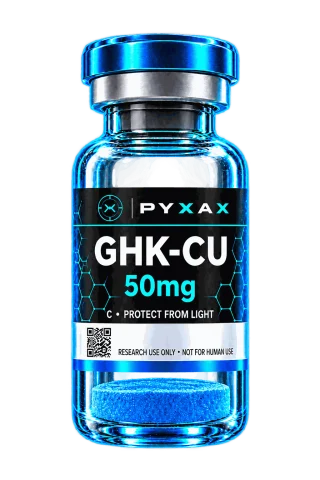
GHK-Cu (glycyl-L-histidyl-L-lysine copper complex). The most extensively characterized of the five, with a literature running back to Pickart and Thaler’s original isolation in Nature New Biology (1973), through Maquart’s fibroblast-collagen work in FEBS Letters (1988) and rat-wound work in the Journal of Clinical Investigation (1993), to Pickart and Margolina’s gene-expression review in the International Journal of Molecular Sciences (2018, PMID 29986520). Its April category change must be read alongside the later May route-specific update described above.
Dihexa acetate (N-hexanoic-Tyr-Ile-(6) aminohexanoic amide). An angiotensin IV-derived small peptide studied at the hepatocyte growth factor/c-Met axis. The primary literature is narrow and comes overwhelmingly from a single research group — Harding, Wright, and colleagues at Washington State — including Journal of Pharmacology and Experimental Therapeutics papers in 2011, 2012, 2013 (PMID 23055539) and 2014. A 2021 Brain Sciences paper examined PI3K/AKT signaling in a transgenic mouse model. Concentrated provenance is not a defect, but it is a characterization the committee is likely to notice.
Melanotan II. A cyclic lactam α-melanotropin analogue designed by Al-Obeidi, Hadley, Pettitt and Hruby (Journal of the American Chemical Society, 1989), with three decades of receptor-selectivity work across MC1R, MC3R, MC4R and MC5R (Bednarek et al., 1999, PMID 10405347). Uniquely among the five, it also has a forensic-analytical literature: LC-UV-MS/MS and LC-HRMS surveys of illegally sold material (PMID 24771717; PMID 33245851) documenting what unregulated product has actually contained.
PEG-MGF (pegylated mechano growth factor, IGF-1 Ec C-terminal peptide). Built on the stretch-associated IGF-1 splice variant identified by Yang, Alnaqeeb, Simpson and Goldspink (1996), with the proliferation-versus-differentiation hypothesis advanced in FEBS Letters (Yang and Goldspink, 2002). It is also the only compound in the group with a prominent published replication failure — Fornaro et al. in American Journal of Physiology — Endocrinology and Metabolism (2014) reported no apparent effect on myoblasts or primary muscle stem cells. Matheny, Nindl and Adamo’s Endocrinology minireview (2010) remains the most useful critical overview.
Read together, this is not a slate that lends itself to a single committee narrative.
Section 3 — What July Suggests About February
Two signals from the July meeting are worth carrying forward, and they point in opposite directions.
The first is that the committee has demonstrated willingness to override its own agency’s staff. An FDA multidisciplinary review team recommended against adding any of the seven July substances. The committee recommended six anyway: BPC-157, KPV and TB-500 at 8-6 with one abstention; MOTS-c at 7-5 with two abstentions; semax at 8-5; epitalon at 7-5 with one abstention. The stated rationale from the “yes” side was largely about who decides — that the judgment belongs with the prescribing physician and the compounding pharmacist.
The second is that the override was not unlimited. Emideltide (the FDA’s designation for DSIP) was rejected 6-7 with one abstention. The margin was one vote. Members who voted no cited the absence of randomized controlled data, poor characterization, and the age of the supporting literature.
The through-line in the FDA’s July objections was analytical rather than ideological. Agency reviewers returned repeatedly to identity: a substance described in the literature with a variable residue count and no settled salt, ester, or free-base form cannot anchor a quality standard, because different salts and esters of the same active moiety can behave very differently. That objection maps unevenly onto the February tranche. GHK-Cu and Melanotan II are well-defined molecules with decades of structural work behind them. LL-37 is well-defined but behaves differently under almost every condition change. Dihexa’s record is narrow. PEG-MGF carries both a pegylation-variability question and a published negative result. If identity and characterization drive the discussion again, these five will not fare alike.
Policy context is also visible and should be stated plainly rather than implied. HHS Secretary Robert F. Kennedy Jr. publicly signaled in February 2026 that the administration intended to widen lawful compounding access to roughly fourteen peptides, and new and temporary committee members were seated ahead of the July meeting. That context does not determine any individual vote, but it is the environment in which the second meeting will occur.
Section 4 — “Recommend” Still Is Not “Approve”
This is the distinction that separates careful reading from hype, and it applies to the February meeting exactly as it applied to July.
A PCAC recommendation is advisory. It is one input among several. Final placement on the 503A Bulks List requires separate notice-and-comment rulemaking, which the FDA has said is how it will announce any final decision — not at a meeting. Practitioners tracking the process generally expect that to run six to twelve months at minimum after a favorable recommendation, and historically longer.
Removal from Category 2 is likewise not the same as authorization. A substance that is off Category 2 but not on the 503A list and not in Category 1 sits in an undetermined space. Counsel advising compounding pharmacies has been consistent on this point: do not begin compounding on the strength of a Category 2 removal alone.
And enforcement has not paused while the process runs. The FDA issued warning letters to peptide sellers through 2026, including to Gram Peptides on March 31, 2026 and Wholesale Peptide on June 17, 2026, the latter following a review of the company’s website. The agency has separately signaled attention to advertising practices and to “research use only” labeling used as cover for human-use marketing — which is precisely why RUO framing has to be real rather than decorative.
Section 5 — What Does Not Change for Research Supply
Because the July vote was widely misread, it is worth stating the February position in advance.
The 503A compounding question governs whether state-licensed pharmacies may prepare patient-specific preparations under a valid prescription when no approved product fits. It is not a drug approval. It is not a finding that a substance is safe or effective. And it does not touch the research-use-only category, which carries no therapeutic claims of any kind.
Whatever the committee recommends for LL-37, GHK-Cu, dihexa, Melanotan II or PEG-MGF, each remains — for laboratory purposes — a research compound supplied strictly for in-vitro and preclinical work, with no human, veterinary, or diagnostic use. A favorable recommendation would not convert it into an approved drug. An unfavorable one would not remove it from the research catalogue. The two frameworks run in parallel and always have.
There is one point of genuine convergence, and it is worth noticing. The FDA’s core July objection — you cannot build a standard for a substance you cannot define — is the same question a certificate of analysis exists to answer. A regulatory body and a research supplier arrived at the same conclusion from opposite directions.
Section 6 — How to Evaluate a Source Between Now and February
The interval before the second meeting is exactly the window in which vendor copy tends to drift. A few practical filters:
Check whether a claimed status is real. “Off Category 2” is a fact. “FDA-cleared,” “FDA-approved,” “now legal to compound,” or “newly approved peptide” are not, and none of them describe any of these five compounds today.
Watch for indication laundering. The therapeutic indications named in an FDA briefing document define the scope of the compounding question. They are not proven effects and not properties of any product. Copy that restates them as benefits is misrepresenting the record.
Separate compounding from research use. A source that blurs “recommended for the 503A list” into “approved for sale” or “safe to use” is either confused or selling something.
Demand characterization regardless of the outcome. The identity question applies to the material in the vial no matter how any committee votes. Confirmed identity by mass spectrometry, a resolved impurity profile, and a lot-specific certificate are the standard — and for a group that includes a pegylated construct and a copper complex, identity confirmation is not a formality.
Prefer independently verifiable documentation. A PDF emailed on request is weaker than a batch-numbered result you can look up yourself.
Section 7 — Regulatory Context (August 2026)
As of publication, the confirmed record is: twelve peptide bulk substances were removed from Category 2 effective on or about April 22–23, 2026 following nomination withdrawals; GHK-Cu’s April Category 1 removal was followed by the May route-specific update described above; the PCAC met July 23–24, 2026 and recommended six of seven substances for the 503A Bulks List while rejecting emideltide; and the FDA has committed to convening the PCAC again before the end of February 2027 to consider LL-37, GHK-Cu, dihexa acetate, Melanotan II and PEG-MGF. A specific meeting date had not been announced at the time of writing.
None of this is final agency action. Any addition to the 503A list requires notice-and-comment rulemaking. This process concerns pharmacy-compounding permissions only; it is not FDA approval of any compound as a drug, and it does not modify the research-use-only status of laboratory compounds. Researchers remain responsible for compliance with all applicable regulations in their jurisdiction.
For fuller background, see the PYXAX guides on FDA peptide reclassification, the July 2026 PCAC final vote results, and the 2026 peptide compliance landscape — plus the compound guides for GHK-Cu, LL-37, dihexa, Melanotan II and PEG-MGF.
Section 8 — PYXAX Verification Standard
PYXAX uses accredited independent laboratories in its verification network, including ILS Labs, Krause Analytical, and Janoshik. The current per-batch panel covers purity by HPLC, potency against label claim, and identity by LC-MS. A lot-specific COA is published in the COA Library before dispatch and names the laboratory that tested that batch. Endotoxin, heavy-metals, and final-vial sterility screening are not part of the current panel.
Testing panel:
- Chromatographic purity by HPLC
- Molecular identity by LC-MS
- Lot-specific COA published in the PYXAX COA Library before dispatch
Lot-specific documentation. Every production lot carries its own batch number matching the COA in the PYXAX COA Library, so a researcher can confirm identity — including the exact form and species supplied — before ordering. For a compound set that includes a copper complex and a pegylated construct, that specificity is the whole point: “GHK-Cu” and “PEG-MGF” are not self-defining names, and the certificate is where the ambiguity gets resolved.
Community verification. Select lots are submitted to Janoshik Analytical, with results publicly searchable by batch number — no vendor contact required. Founding batches were verified through Krause Analytical (accredited US laboratory), and ongoing production lots are tested across the accredited-laboratory network described above.
View the PYXAX Catalog →
View COA Library →
Read The PYXAX Standard →
All PYXAX compounds are supplied strictly for in-vitro and preclinical laboratory research use only. Not for human consumption. Not for veterinary use. Not for diagnostic procedures. These statements have not been evaluated by the FDA. Researchers are responsible for compliance with all applicable laws and regulations governing the use of research compounds in their jurisdiction.