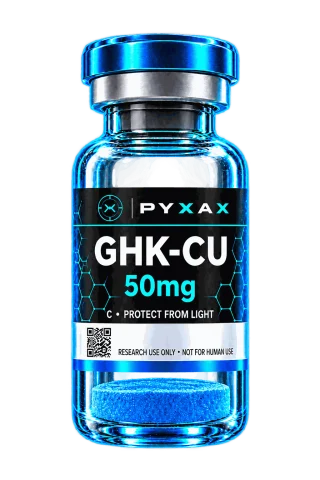
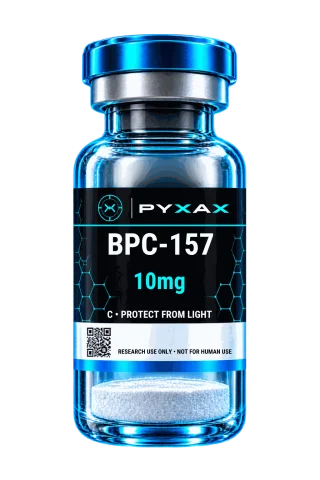
The FDA’s Pharmacy Compounding Advisory Committee (PCAC) has finished its two-day peptide review, and the final scorecard is now complete. Over July 23–24, 2026, the committee recommended six of the seven peptides it evaluated for inclusion on the Section 503A Bulk Drug Substances List — and rejected one. In doing so it overrode its own agency’s scientific staff, who had recommended against adding any of the seven. This article assembles the full, confirmed tally from both days, records the exact vote margins and the indications each peptide was reviewed under, and — the part most coverage skips — explains why a compounding-eligibility recommendation does not touch the research-use-only framework under which laboratory compounds are supplied.
This article is educational and regulatory in nature. It is not legal advice, and it makes no claim that any compound is approved, safe, or effective for human use. Every compound reference here is in the context of in-vitro and preclinical laboratory research use only.
For in-vitro and preclinical laboratory research use only. Not for human consumption. Not for veterinary use.
Section 1 — The Complete Two-Day Tally
Seven substances were evaluated, each considered in both free base and acetate salt forms, against the indications the FDA framed for the compounding review. The confirmed results:
- BPC-157 (reviewed for ulcerative colitis) — recommended, 8-6 with 1 abstention. The same 8-6-1 result was reached separately for the free base and the acetate forms.
- KPV (reviewed for wound treatment and inflammatory conditions) — recommended, 8-6-1.
- TB-500 / thymosin β-4 fragment (reviewed for wound healing, tendon and ligament repair) — recommended, 8-6-1.
- MOTS-c (nominated for obesity and osteoporosis; FDA did not evaluate those proposed uses — FDA MOTS-c briefing document, 2026) — recommended, 7-5 with 2 abstentions, the narrowest passing margin of the meeting.
- Epitalon / Epithalon (reviewed for insomnia) — recommended, 7-5 with 1 abstention.
- Semax (reviewed for cerebral ischemia, migraine, and trigeminal neuralgia) — recommended, 8-5.
- Emideltide / DSIP (reviewed for insomnia, narcolepsy, and opioid withdrawal) — rejected, 6-7 with 1 abstention, the only substance the committee declined to recommend.
Two points of precision matter before anyone builds a narrative on these numbers. First, the indications in parentheses are the therapeutic uses the FDA framed for the compounding question — they are the scope of what was reviewed, not established outcomes, and they have no bearing on research supply, which makes no therapeutic claims of any kind. Second, every one of these is a recommendation from an advisory panel, not a rule, not an approval, and not a determination that any peptide is safe or effective.
Section 2 — Why the Committee Broke From FDA Staff
Ahead of the meeting, an FDA multidisciplinary review team — drawn from the Office of Compounding Quality and Compliance, the Office of Pharmaceutical Quality, and the Office of New Drugs — recommended against adding any of the seven peptides, citing safety, efficacy, and characterization concerns. The committee recommended six of them anyway. Two dynamics explain the divergence.
The first is a running scientific objection about identity. Throughout the FDA presentations, one theme recurred: you cannot build meaningful quality standards for a substance you cannot fully define. An FDA reviewer put it bluntly for BPC-157, asking in effect “What is BPC-157?” — noting that the peptide is described in the literature with a variable number of amino acids and no settled salt, ester, or free-base form. Because different salts and esters of the same active moiety can carry very different physicochemical and pharmacological properties, the agency framed identity and characterization not as technicalities but as prerequisites to any compounding standard. That same characterization concern was raised against emideltide, epitalon, and the others.
The second is a philosophical divide about who decides, visible in the committee’s own words. Member David Pope of XiFin Pharmacy Solutions summarized the “yes” rationale: the decision belongs “in the hands of the physician and pharmacist.” Dissenters were equally direct — members pointed to the “lack of efficacy data and randomized controlled trials,” “too many unknowns,” poor characterization, and, for several substances, carcinogenicity or safety-data concerns. The policy backdrop is also unusually visible: HHS Secretary Robert F. Kennedy Jr. has publicly described himself as a “big fan” of peptides, and in the weeks before the meeting the FDA seated new and temporary committee members, several reported to have ties to prescribing or promoting peptides — a composition that drew internal concern. None of this determines any individual vote, but it is the context in which a six-of-seven reversal of the staff recommendation occurred.
Section 3 — The One That Was Rejected
Emideltide — the FDA’s designation for delta sleep-inducing peptide (DSIP) — was the sole substance the committee declined to recommend, in a narrow 6-7 vote with one abstention. It had been proposed for insomnia, narcolepsy, and opioid withdrawal.
The reasons track the FDA’s briefing package closely. Staff wrote that the peptide is not adequately characterized and carries potential for peptide-related impurities from incomplete coupling, truncations, or side reactions, and that FDA-approved therapies already exist for the proposed indications. An FDA reviewer stated there is “a lack of safety and efficacy data to support using emideltide.” A public-hearing witness noted the most recent study on the substance was roughly thirty years old. Committee members who voted no cited the FDA’s safety and efficacy position and the low quality of the efficacy evidence. The emideltide result is a useful reality check on the meeting’s momentum: the committee was willing to override staff repeatedly, but not universally, and the margin that sank emideltide was a single vote.
Section 4 — “Recommend” Is Not “Approve”: The Process From Here
This is the distinction that separates careful reading from hype, and three things are true at once.
First, a PCAC recommendation is advisory. It is one input among many, and the FDA has stated it will continue reviewing the docket comments and data and will announce any final decision through formal notice-and-comment rulemaking — not at the meeting. That rulemaking process typically runs well over a year.
Second, PCAC recommendations usually — but not always — track the agency’s ultimate decision. An FDA compounding official acknowledged the agency has gone the other way at least once before. A favorable vote makes inclusion more likely; it does not make it final.
Third, and most important for anyone using these terms: the 503A compounding question is entirely separate from the research-use-only framework. Compounding eligibility governs whether state-licensed pharmacies may prepare patient-specific medications under a valid prescription when no approved product fits. It is not a finding that a substance is safe or effective, it is not an FDA drug approval, and it does not alter the research-compound category, which carries no therapeutic claims of any kind. A peptide can be recommended for compounding and remain, for laboratory purposes, exactly what it was: a research compound supplied strictly for in-vitro and preclinical work.
Section 5 — What Does Not Change for Research Supply
Because the vote is being widely misread, it is worth stating plainly what is unchanged. The research-use-only designation is a supply-and-use framework, not an efficacy verdict. Nothing in the PCAC outcome converts a research compound into an approved drug, authorizes human use of anything supplied for research, or removes a researcher’s responsibility to comply with the laws of their own jurisdiction.
If anything, the meeting reinforced the single point PYXAX has made from the start: identity and characterization are everything. The FDA’s central objection across all seven substances was not ideological — it was analytical. “What is BPC-157?” is a question about molecular identity, salt form, and impurity profile, and it is exactly the question a proper certificate of analysis exists to answer. A regulatory body and a research supplier arrived at the same conclusion from opposite directions: a peptide you cannot characterize is a peptide you cannot stand behind.
Section 6 — How to Read Coverage of This Vote
Because this event will generate a wave of vendor marketing, a few filters are worth applying to anything you read.
Check the exact tally against the record. “Approved,” “legalized,” and “cleared” are the words to distrust. The committee recommended six substances and rejected one; it did not approve, legalize, or clear anything. Any confident claim otherwise should be traced to the official FDA meeting record.
Watch for indication laundering. The indications named in the review (ulcerative colitis, wound healing, insomnia, and so on) describe the FDA’s compounding question, not proven effects and not properties of any product. Vendor copy that restates them as benefits is misrepresenting the record.
Separate compounding from research use. A source that blurs “recommended for 503A compounding” into “approved for sale” or “safe for use” is either confused or selling something. The two frameworks are distinct.
Demand characterization regardless of the vote. The FDA’s characterization objection applies to the compound in the vial no matter what any committee recommends. Identity confirmed by mass spectrometry, a resolved impurity profile, and a lot-specific certificate remain the standard — the vote changes none of that.
Section 7 — Regulatory Context (July 2026)
As of the close of the July 23–24, 2026 meeting, the committee’s recommendations stand as advisory input to the FDA. The confirmed record is that BPC-157, KPV, TB-500, MOTS-c, epitalon, and semax received favorable recommendations for the 503A Bulks List, while emideltide (DSIP) was not recommended. The nominations for the substances had reportedly been withdrawn by their original nominators before the meeting, and the FDA elected to evaluate each on its own initiative given the level of public interest.
None of this is a final agency action. Any addition to the 503A list would require notice-and-comment rulemaking, and the FDA has said it will announce final decisions through that process rather than at the meeting. This review concerns pharmacy-compounding permissions; it does not constitute FDA approval of any compound as a drug, and it does not modify the research-use-only status of laboratory compounds. Researchers remain responsible for compliance with all applicable regulations in their jurisdiction. (See the PYXAX FDA peptide reclassification, PCAC peptide-decision, and peptide-compliance landscape guides for the fuller background.)
Section 8 — PYXAX Verification Standard
PYXAX uses accredited independent laboratories in its verification network, including ILS Labs, Krause Analytical, and Janoshik. The current per-batch panel covers purity by HPLC, potency against label claim, and identity by LC-MS. A lot-specific COA is published in the COA Library before dispatch and names the laboratory that tested that batch. Endotoxin, heavy-metals, and final-vial sterility screening are not part of the current panel.
Testing panel:
- Chromatographic purity by HPLC
- Molecular identity by LC-MS
- Lot-specific COA published in the PYXAX COA Library before dispatch
Lot-specific documentation. Every production lot receives its own batch number, matching the COA in the PYXAX COA Library, so researchers can confirm identity — including the exact form and species supplied — before ordering. This is the direct answer to the “what is it?” question the FDA raised throughout the meeting.
Community verification. Select lots are submitted to Janoshik Analytical, with results publicly searchable by batch number — no vendor contact required. Founding batches were verified through Krause Analytical (accredited US laboratory), and ongoing production lots are tested across the accredited-laboratory network described above.
View the PYXAX Catalog →
View COA Library →
Read The PYXAX Standard →
Additional resources: pyxax.com/shop/ · pyxax.com/standard/
All PYXAX compounds are supplied strictly for in-vitro and preclinical laboratory research use only. Not for human consumption. Not for veterinary use. Not for diagnostic procedures. These statements have not been evaluated by the FDA. Researchers are responsible for compliance with all applicable laws and regulations governing the use of research compounds in their jurisdiction.