As the FDA’s Pharmacy Compounding Advisory Committee prepares to meet on July 23–24, 2026, the peptide sector is paying unusually close attention to compliance. The meeting itself concerns compounding-pharmacy regulation, but the broader climate — heightened regulatory scrutiny, a steady stream of warning letters, and public commentary from healthcare attorneys anticipating enforcement — has made “compliance posture” a live question for every kind of supplier in the space.
This article is an educational analysis of that landscape, written for serious research suppliers who want to understand where regulatory risk actually concentrates. It is not legal advice, and it is emphatically not a guide to avoiding scrutiny. The premise here is the opposite: that the durable way to reduce regulatory risk is to actually be what you claim to be — a research-use-only supplier operating honestly — rather than to dress up a non-compliant operation in disclaimer language. We look at the legitimate regulatory pathways, why marketing surfaces attract the most enforcement attention, and why a verification-first, research-only posture aligns with what informed legal commentary in this space consistently recommends.
This article is educational industry analysis, not legal advice. For questions about a specific business, consult qualified regulatory counsel. All compound references are in the context of in-vitro and preclinical research use only.
Section 1 — The Regulatory Moment
Peptides have moved from a niche corner of the research-chemical market to a subject of mainstream regulatory attention. Trade and legal coverage through 2025 and 2026 has repeatedly signaled that industry participants expect FDA enforcement activity to increase. Reporting from outlets covering the supplement and compounding sectors has captured a widely shared sentiment among marketers that non-compliance findings could surface at any time.
That expectation is voiced not only by journalists but by attorneys who work in the space. Jeff Cohen, a healthcare attorney with the Florida Healthcare Law Firm and Co-Founder of the American Peptide Association, is among the named public figures who speak and present on peptide compliance — including sessions on compliant marketing and communication strategy at industry conferences such as the Informa Connect Compounding Pharmacy Compliance event. The existence of an industry association organized specifically around compliance, and the prominence of legal-marketing sessions at professional events, are themselves signals: the sector’s own experts treat regulatory posture as the central operational risk, not an afterthought.
None of this is cause for alarm on its own. It is simply the context in which any serious supplier now operates, and it rewards a clear understanding of which regulatory lane a business actually occupies.
Section 2 — Three Legitimate Pathways, Clearly Distinguished
Much of the confusion in the peptide market comes from blurring distinct regulatory pathways that are not interchangeable. There are several legitimate ways a peptide can lawfully exist in commerce, and they carry different obligations.
Research-use-only (RUO) suppliers provide compounds to laboratories and qualified researchers for in-vitro and preclinical work. These materials are not medicines, are not intended for human or animal consumption, and are labeled accordingly. The RUO pathway is legitimate precisely because the product is genuinely sold and used as a research input — not as a therapy in disguise.
503A compounding pharmacies prepare patient-specific medications pursuant to a valid prescription. This is a clinical pathway, governed by the Federal Food, Drug, and Cosmetic Act and state pharmacy law, and it is the pathway most directly implicated by the July 2026 PCAC review of bulk drug substances.
503B outsourcing facilities compound at larger scale under more stringent conditions, registered with the FDA and subject to current good manufacturing practice (CGMP) requirements.
CGMP drug manufacturers produce FDA-approved drug products under the full weight of pharmaceutical manufacturing regulation.
The essential point is that these are separate lanes with separate rules. An RUO supplier is not a compounding pharmacy and does not make therapeutic products; a compounding pharmacy is not a research vendor. Problems in the market frequently trace back to operations that occupy one lane while marketing as though they occupy another — most commonly, RUO-labeled products marketed with the language of therapeutics.
Section 3 — Why “the Website” Is the Enforcement Trigger Point
Across published legal commentary on peptide enforcement, a consistent theme emerges: the supplier’s own public-facing marketing is typically what converts an otherwise lawful research product into an apparent unapproved drug in the eyes of regulators. The product may be identical; what changes its legal character is how it is presented.
This is because “intended use” is a legal concept driven substantially by claims. When a peptide is marketed with statements that it treats, prevents, cures, or mitigates a disease or condition, regulators may classify it as a drug regardless of a “research use only” label elsewhere on the site. The website — its product descriptions, blog content, testimonials, metatags, and even the products it bundles or cross-sells — becomes the primary evidentiary record of intended use.
In practical terms, this means the highest-leverage compliance surface for a research supplier is not the vial or the lab; it is the marketing. A genuinely research-oriented operation and a non-compliant one can stock the same freezer. What distinguishes them, and what draws enforcement, is what they say to the public.
Section 4 — The Highest-Risk Website Elements
Legal analyses of FDA and FTC enforcement in this area repeatedly identify a few categories of website content as carrying the most risk.
Outcome-based and disease claims. Any statement that a compound produces a physiological outcome in humans — that it heals, restores, enhances, reduces, or treats something — is the single most reliable way to have a research product reclassified as an unapproved drug. This includes implied claims through testimonials, before/after framing, or condition-specific landing pages.
Brand-drug comparisons. Positioning a research compound against a named, FDA-approved pharmaceutical — “the research alternative to” a branded product — imports the approved drug’s therapeutic context onto an unapproved compound. Commentary consistently flags this kind of comparison as high-risk because it makes the intended-use argument for the regulator.
Human-use signals in the purchase experience. Selling research compounds alongside injection supplies, reconstitution kits, or dosing calculators, or providing human-use “protocols,” undercuts an RUO position by demonstrating an expectation of human consumption. Reporting on enforcement actions has noted that the pairing of “research” disclaimers with such human-use signals has been treated by the FDA as evidence that the disclaimer was cosmetic.
The through-line is that risk concentrates wherever the marketing implies human therapeutic use. A research supplier that describes its compounds strictly in research terms — molecular characterization, in-vitro and preclinical literature, analytical verification — is presenting a fundamentally different evidentiary record than one that gestures at human outcomes.
Section 5 — Why an RUO Label Is Not, by Itself, a Shield
It is important to be honest about the limits of the “research use only” designation, because a great deal of low-quality marketing treats it as a magic phrase. It is not.
Published legal commentary is consistent on this point: the RUO label provides little protection when the surrounding conduct indicates human use. Courts and regulators have declined to credit “research chemical” framing where therapeutic claims were made or where products were packaged in ways that anticipated human consumption. The FDA has characterized such disclaimers, in some enforcement contexts, as attempts to evade scrutiny rather than good-faith statements of intended use. Separately, a clean certificate of analysis obtained from a non-accredited source does not by itself establish a legal defense.
The correct lesson is not that RUO framing is worthless — it is that RUO framing is only meaningful when it is true. The disclaimer describes a reality (a compound genuinely supplied and used for research) rather than papering over a different one. This is why the honest, durable compliance posture and the ethical posture converge: the way to legitimately occupy the research lane is to actually operate in it, end to end, from how compounds are described to what is and isn’t sold alongside them.
Section 6 — The Significance of the July 2026 PCAC Meeting
The July 23–24, 2026 PCAC meeting is significant less because it will immediately change the rules and more because it marks the maturing of peptides as a regulated category. The committee is evaluating whether specific bulk drug substances should be added to the 503A Bulks List for compounding — an advisory, non-binding step within the compounding-pharmacy framework. (We cover the mechanics of that process, and the important fact that it does not make any compound “legal for human use,” in our companion analysis of the 2026 FDA peptide reclassification.)
For research suppliers, the meeting’s relevance is contextual rather than direct. It does not alter the RUO framework, but it signals sustained regulatory engagement with peptides as a whole. In an environment of increasing attention, the suppliers best positioned are those whose compliance posture does not depend on the outcome of any single proceeding — because it is built on genuinely operating as a research supplier and on verifiable analytical rigor.
It is also worth acknowledging the countervailing perspective in the public debate. Some observers, including investigative reporting, have argued that loosening restrictions could expose the market to inadequately vetted products. That concern reinforces rather than undercuts the case for verification: in a market where trust is contested, independently confirmable analytical data is what separates a credible supplier from a mere assertion of quality.
Section 7 — The PYXAX Posture
PYXAX operates on a verification-first, research-use-only basis, and the compliance analysis above is not aspirational for us — it describes how the operation is already structured.
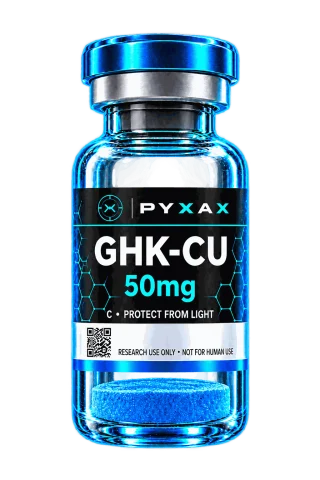
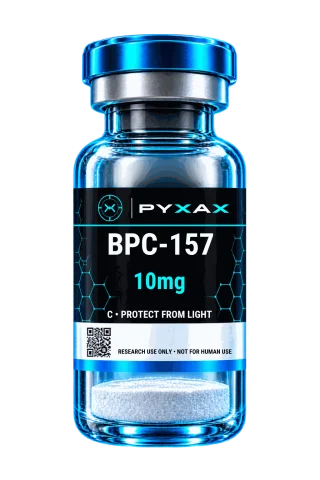
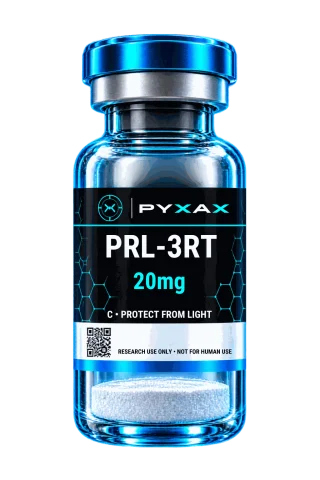
Research-only framing, consistently. PYXAX describes compounds in research terms: molecular profiles, mechanism at the pathway level, and the published in-vitro and preclinical literature. Compounds are supplied for laboratory research use only, not for human consumption, and the marketing does not make therapeutic, outcome-based, or brand-comparison claims.
Verification that is independently confirmable. Each dispatched lot is verified by an accredited independent laboratory: purity by HPLC, potency against label claim, and identity by LC-MS, with its lot-specific COA published in the PYXAX COA Library before dispatch. Endotoxin, heavy-metals, and final-vial sterility screening are not part of the current panel. Select lots are submitted to Janoshik Analytical for community verification, searchable by batch number. Founding batches were verified by Krause Analytical.
Lot-specific documentation. Each production lot carries its own batch number, matching the COA in the PYXAX COA Library, so a researcher can confirm the analytical record independently before ordering.
This is what “aligned with informed legal commentary” means in practice: not a set of disclaimers bolted onto a store, but an operation whose public presentation and internal reality are the same thing — a research supplier that can prove what it ships.
View COA Library →
Read The PYXAX Standard →
Browse Research Compounds →
All PYXAX compounds are supplied strictly for in-vitro and preclinical laboratory research use only. Not for human consumption. Not for veterinary use. Not for diagnostic procedures. These statements have not been evaluated by the FDA. This article is educational industry analysis and not legal advice; businesses should consult qualified regulatory counsel regarding their specific circumstances. Researchers are responsible for compliance with all applicable laws and regulations governing the use of research compounds in their jurisdiction.