At approximately 2:00 PM Eastern on March 6, 2026, Peptide Sciences posted a three-sentence notice on their homepage and went dark. No advance warning. No guidance for customers with pending orders. No explanation beyond the word “voluntary.” The largest research peptide vendor in the United States — generating an estimated $7.4 million per month in online sales — was done.
For thousands of researchers who had relied on Peptide Sciences as their default supplier for years, the question became immediate: where do you go now?
This article examines what happened, what the shutdown revealed about supplier evaluation, and what qualified researchers should look for when choosing a replacement.
For in-vitro and preclinical laboratory research use only. Not for human consumption.
What Happened to Peptide Sciences
The shutdown did not happen in a vacuum. Three forces converged in late 2025 and early 2026 that made continued operation untenable.
FDA enforcement escalated significantly. December 2024 brought warning letters to multiple vendors. June 2025 saw the first physical warehouse raid on a major peptide vendor — Amino Asylum — a significant escalation from warning letters to direct enforcement action. By early 2026, the Department of Justice had moved past civil enforcement and secured guilty pleas from individuals tied to grey-market peptide distribution. For the principals of a $7.4 million per month operation, the risk profile shifted from business risk to personal legal risk.
Third-party testing revealed quality problems. Independent testing of Peptide Sciences products — particularly retatrutide — revealed quality inconsistencies across 37 tested samples. For a vendor that had built its reputation on being the quality standard, this was damaging. Researchers who had defended Peptide Sciences as the gold standard suddenly had data suggesting otherwise. The quality reputation that had been the company’s primary competitive defense was gone.
The regulatory framework tightened. Proposed federal legislation introduced in early 2026 would prohibit the sale of research chemicals biologically identical to FDA-approved drugs without a New Drug Application. The legal environment that had allowed the grey-market peptide vendor model to operate was changing rapidly and irreversibly.
The result was a three-sentence notice and an overnight shutdown that left thousands of researchers without a supplier, with pending unfulfilled orders, and with store credit balances that became worthless.
What the Shutdown Revealed
Peptide Sciences wasn’t just a vendor — it was the default. When someone started researching peptides, Peptide Sciences was often the first name they encountered. Its closure exposed several assumptions that researchers had been making without examining them.
Longevity does not equal regulatory resilience. Many researchers assumed that a company with Peptide Sciences’ history was insulated from the kind of sudden closure that had taken down smaller players. A decade of operation turned out to provide no protection when the enforcement environment changed fundamentally.
“Third-party tested” without named labs means nothing. Peptide Sciences made testing claims that the research community largely accepted without scrutiny. When independent testing began producing failing grades — particularly on retatrutide — there was no public verification infrastructure to consult. No named laboratory. No public COA database. No QR verification portal. Just a company’s word.
Price and catalog size are not quality indicators. The peptide market had trained researchers to treat established vendors with large catalogs as reliable by default. The Peptide Sciences shutdown demonstrated that catalog breadth and competitive pricing are entirely independent of verification quality and regulatory sustainability.
Supply chain dependence is a research risk. For researchers running ongoing studies, a supplier disappearing overnight is not just an inconvenience — it compromises experimental continuity, timelines, and reproducibility. Choosing a supplier is a research infrastructure decision, not just a procurement decision.
What to Look for in a Replacement
The post-Peptide Sciences market attracted opportunistic vendors quickly. Several launched within days of the shutdown, hoping to capture displaced customers with aggressive marketing and no substance behind it. Researchers evaluating alternatives need specific criteria, not brand familiarity.
Named, accredited testing laboratories
The single most important criterion. Any vendor can claim “third-party tested.” The question is which third party, what accreditation they hold, and whether results are independently verifiable. ISO 17025 accreditation is the international standard for analytical testing laboratory competence. Vendors should name the specific laboratory — not just claim testing exists.
Lot-specific COAs published before purchase
A Certificate of Analysis should cover the specific production lot that ships to you — not a representative sample from a different batch. The batch number on your vial should match the batch number on the COA. COAs should be publicly accessible before you buy, not provided only after payment.
Independent public verification
The strongest verification systems allow researchers to confirm results without contacting the vendor at all. ILS Laboratories provides QR-coded COAs that link directly to their verification portal. Janoshik Analytical maintains a public searchable database where any researcher can look up batch results by number. Public verification is the difference between a claim and proof.
Honest disclosure of limitations
No research compound supplier operating outside 503B compounding infrastructure can verify sterility of the final sealed vial. Vendors who claim otherwise are either operating 503B facilities — which requires FDA registration and extensive compliance — or making claims they cannot support. A supplier that openly states what their testing does not cover is more trustworthy than one making comprehensive claims without specifying methodology.
US business entity with verifiable presence
A registered US business entity, verifiable physical address, and identifiable principals are basic credibility signals. Vendors that launched in 2026 with anonymous operations and aggressive marketing following the Peptide Sciences shutdown are exactly the opportunistic entrants researchers should avoid.
Compliance-first operations
Vendors built around regulatory grey areas are the most vulnerable to the continued enforcement that characterized 2025–2026. The vendors most likely to still be operating in 2027 and beyond are those that positioned themselves for long-term regulatory sustainability — not short-term volume capture.
The Verification Standard That Was Missing
What the Peptide Sciences shutdown ultimately revealed was the absence of a verification standard in the research peptide market. There was no consistent expectation for what “tested” meant, no community-enforced requirement for public COA access, and no baseline for independent verifiability.
The vendors that will define the next phase of this market are those building verification infrastructure — not those making the loudest claims about quality they cannot demonstrate. The research community has learned, at significant cost, that the default vendor is not necessarily the trustworthy vendor. Going forward, trust will need to be earned through transparent, verifiable, independently confirmable documentation — not assumed based on catalog size or years of operation.
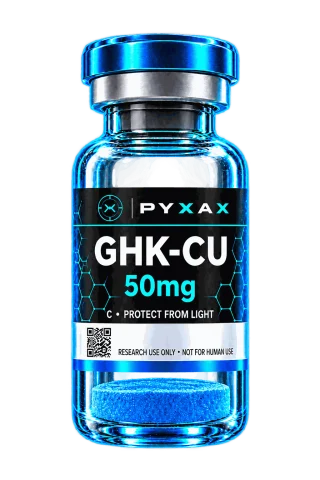
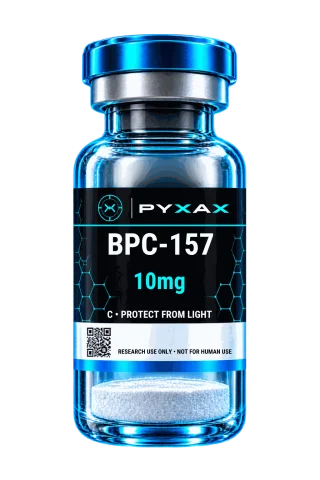
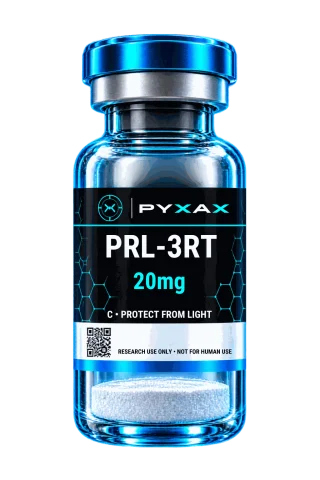
PYXAX Verification Standards
PYXAX was built specifically around the verification gap the Peptide Sciences shutdown made visible.
Each dispatched PYXAX production lot undergoes independent third-party testing, with a lot-specific COA published before dispatch:
Primary testing: accredited independent laboratories (ISO 17025)
- Purity by HPLC
- Potency against label claim
- Molecular identity by LC-MS
- Lot-specific COA published in the COA Library before dispatch
Community verification: Janoshik Analytical (Czech Republic)
Applied to flagship compounds. Results publicly searchable at janoshik.com by batch number — no vendor contact required.
What our testing does not cover:
Endotoxin, heavy-metals, and final-vial sterility screening are not part of the current per-batch panel. Sterility of the final sealed vial requires 503B compounding infrastructure that PYXAX does not operate.
PYXAX launched in June 2026.
We do not have years of history. We have a verification infrastructure built before we sold a single vial, and a commitment to publishing lot-specific COAs before compounds ship.
That is the claim. Every piece of it is verifiable.
View PYXAX Verified Research Compounds →
View COA Library →
Read The PYXAX Standard →
All PYXAX compounds are supplied strictly for in-vitro and preclinical laboratory research use only. Not for human consumption. Not for veterinary use. Not for diagnostic procedures. For qualified laboratory researchers only. These statements have not been evaluated by the FDA.