“Best research peptides” is a phrase that means something very specific once you strip away the marketing. It does not mean the peptides with the most impressive anecdotes or the loudest vendor copy. In a laboratory context, the peptides worth knowing are the ones with a defined molecular identity, a mechanism described at the receptor or pathway level in peer-reviewed work, a real body of preclinical literature you can retrieve and read, and — critically — a supply chain that can prove what is actually in the vial. This guide takes that definition seriously. It surveys the research peptides most frequently referenced in 2026 preclinical work, gives each a molecular profile and a pathway-level mechanism, points to real published citations, and then spends as much time on how to evaluate a source as on the compounds themselves.
This guide is written for qualified laboratory researchers comparing research compounds. It is a reference and evaluation resource, not a ranking of physiological effects, and it makes no claim that any compound is safe, effective, or approved for any use in humans or animals.
For in-vitro and preclinical laboratory research use only. Not for human consumption. Not for veterinary use.
Section 1 — Molecular Profiles of the Most-Referenced Research Peptides
The compounds below are grouped not by popularity but by the research area they are most often used to probe. Molecular values are given as commonly reported figures; exact mass and formula vary with salt form, acylation state, and whether a fragment or full-length sequence is supplied, so every number here should be confirmed against a lot-specific certificate of analysis rather than taken as a fixed constant.
Cytoprotective & ECM research
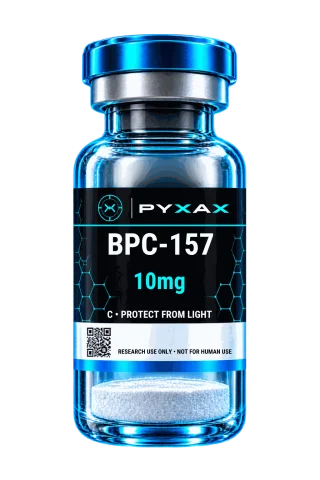
- BPC-157 (pentadecapeptide) — CAS 137525-51-0; molecular formula C₆₂H₉₈N₁₆O₂₂; molecular weight ≈ 1,419.5 Da; 15 amino acids. A partial sequence derived from a gastric protein, studied as a cytoprotection and angiogenesis reference compound.
- TB-500 / Thymosin β-4 — CAS 77591-33-4; molecular formula C₂₁₂H₃₅₀N₅₆O₇₈S; molecular weight ≈ 4,963 Da; 43 amino acids for the full-length protein. Note that “TB-500” is often used loosely; a source should specify whether the material is full-length thymosin β-4 or a fragment.
Metabolic and mitochondrial research
- MOTS-c — CAS 1627580-64-6; molecular formula C₁₀₁H₁₅₂N₂₈O₂₃S₂; molecular weight ≈ 2,174.6 Da; 16 amino acids. A mitochondrial-derived peptide used to study cellular energy-sensing pathways.
- Epithalon (Epitalon) — CAS 307297-39-8; sequence Ala-Glu-Asp-Gly; molecular formula C₁₄H₂₂N₄O₉; molecular weight ≈ 390.3 Da; 4 amino acids. A synthetic tetrapeptide modeled on the pineal extract epithalamin, studied in telomere-biology models.
Growth-hormone-axis research
- CJC-1295 (modified GRF 1-29) — CAS 863288-34-0; molecular formula C₁₅₂H₂₅₂N₄₄O₄₂; molecular weight ≈ 3,367.9 Da; 30 amino acids. A GHRH-analogue reference compound.
- Ipamorelin — CAS 170851-70-4; molecular formula C₃₈H₄₉N₉O₅; molecular weight ≈ 711.9 Da; 5 amino acids. A selective ghrelin/GH-secretagogue-receptor probe, frequently studied alongside CJC-1295.
Cognitive and neuropeptide research
- Semax — CAS 80714-61-0; molecular formula C₃₇H₅₁N₉O₁₀S; molecular weight ≈ 813.9 Da; 7 amino acids. A synthetic analogue of an ACTH(4-10) fragment used in neurotrophic-signaling studies.
- Selank — CAS 129954-34-3; molecular formula C₃₃H₅₇N₁₁O₉; molecular weight ≈ 751.9 Da; 7 amino acids. A synthetic analogue of the immunomodulatory peptide tuftsin.
Extracellular-matrix and skin-biology research
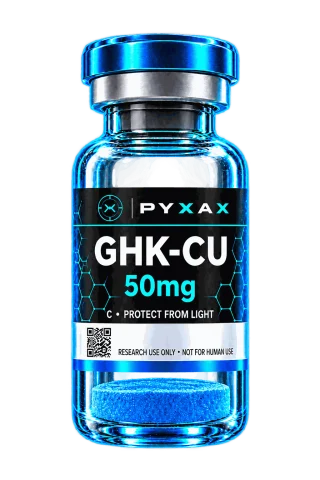
- GHK-Cu (copper tripeptide-1) — GHK CAS 49557-75-7; copper complex CAS 89030-95-5; GHK formula C₁₄H₂₄N₆O₄ (≈ 340.4 Da), rising to ≈ 403.9 Da as the copper complex. A copper-binding tripeptide studied in matrix-remodeling and gene-expression models.
The single most useful habit when reading this table is to treat the CAS number and the confirmed mass as the identity of the compound, and to treat everything else — the common name, the abbreviation, the vendor description — as a label that may or may not match. “TB-500,” in particular, is a name applied to more than one thing.
Section 2 — Mechanisms (Pathway Language)
Each of these compounds is studied for its action at a defined molecular target or pathway. None is described here in terms of a clinical endpoint.
Cytoprotection and angiogenesis. BPC-157 is studied in preclinical models for effects on angiogenic signaling, including reported upregulation of VEGFR2 expression and endothelial-cell migration in vitro, and for interaction with the nitric-oxide system. Thymosin β-4 (the protein behind “TB-500”) is an actin-sequestering protein; its research interest centers on actin regulation and the cell-migration and matrix-interaction pathways that follow from it.
Cellular energy sensing. MOTS-c is a mitochondrial-derived peptide studied as a regulator of the AMP-activated protein kinase (AMPK) pathway. In cell and rodent systems it has been reported to influence folate–purine metabolism and to activate AMPK signaling, which is why it is used as a probe of metabolic energy-sensing rather than of any single organ outcome.
Telomere biology. Epithalon is studied in cell-culture models for its reported induction of telomerase (hTERT) activity and associated telomere elongation in human somatic cells. It is used as a tool compound in replicative-senescence and pineal-bioregulation research.
GH-axis signaling. CJC-1295 is a growth-hormone-releasing-hormone (GHRH) analogue that engages the GHRH receptor; ipamorelin is a selective agonist at the growth-hormone-secretagogue receptor (the ghrelin receptor). Together they are studied as complementary probes of the two upstream inputs to growth-hormone pulsatility, strictly at the receptor-signaling level.
Neurotrophic signaling. Semax is studied for its reported effects on brain-derived neurotrophic factor (BDNF) and its receptor pathway in rodent nervous-system models. Selank, a tuftsin analogue, is studied in models of GABAergic and monoaminergic signaling and immunomodulation.
Matrix remodeling. GHK-Cu is a copper-binding tripeptide studied for its influence on extracellular-matrix gene expression and copper-dependent enzymatic pathways in fibroblast and skin-model systems.
Every mechanism above is a description of what the compound is studied for in controlled preclinical systems. No human outcome, therapeutic effect, or physiological benefit is claimed or implied for any of them.
Section 3 — Preclinical Research Data
The strength of a research peptide’s literature is uneven across this list, and honesty about that unevenness is part of the standard.
BPC-157 has a large preclinical corpus — a PubMed search in 2025 retrieved well over 190 articles referencing the peptide — but that literature is heavily concentrated in a single research group and its collaborators, and the compound remains, in the FDA’s own words during the 2026 review, “not well-characterized.” MOTS-c rests on a well-cited foundational discovery paper and a growing set of independent metabolic studies. Epithalon’s telomerase findings are documented but similarly dominated by one institute. Thymosin β-4’s actin biology is broadly established across independent laboratories. The GH-axis compounds (CJC-1295, ipamorelin) have discrete pharmacology papers behind them. Semax and selank have a substantial Russian-language and English-language neuropharmacology literature. GHK-Cu’s matrix-remodeling work is among the more independently replicated in the group.
The interpretive rule that applies to all of them is identical: these are measurements in defined experimental systems — cell cultures, rodent models, biochemical assays — and preclinical or in-vitro findings do not transfer to human physiology. A compound with a deep literature is not a compound with proven human effects; it is a compound that has been studied more.
Section 4 — Published Literature (Verifiable Citations)
The following are real, published references retrievable through PubMed, PubMed Central, or the publishing journal. Researchers are encouraged to read the primary sources directly rather than rely on secondary summaries.
- Józwiak M, et al. “Multifunctionality and Possible Medical Application of the BPC 157 Peptide—Literature and Patent Review.” Pharmaceuticals. 2025;18(2):185 (doi:10.3390/ph18020185) — a recent literature and patent review of BPC-157.
- Lee C, Zeng J, Drew BG, et al. “The mitochondrial-derived peptide MOTS-c promotes metabolic homeostasis and reduces obesity and insulin resistance.” Cell Metabolism. 2015;21(3):443–454 (doi:10.1016/j.cmet.2015.02.009; PMC4350682) — the foundational MOTS-c discovery paper.
- Khavinson VKh, Bondarev IE, Butyugov AA. “Epithalon peptide induces telomerase activity and telomere elongation in human somatic cells.” Bulletin of Experimental Biology and Medicine. 2003;135(6):590–592 (doi:10.1023/A:1025493705728) — the primary telomerase/telomere report for epithalon.
- Goldstein AL, Hannappel E, Kleinman HK. “Thymosin β4: actin-sequestering protein moonlights to repair injured tissues.” Trends in Molecular Medicine. 2005;11(9):421–429 (doi:10.1016/j.molmed.2005.07.004) — a foundational review of thymosin β-4 biology.
- Teichman SL, Neale A, Lawrence B, et al. “Prolonged stimulation of growth hormone and insulin-like growth factor I secretion by CJC-1295, a long-acting analog of GH-releasing hormone, in healthy adults.” Journal of Clinical Endocrinology & Metabolism. 2006;91(3):799–805 (doi:10.1210/jc.2005-1536) — pharmacology of the CJC-1295 GHRH analogue.
- Raun K, Hansen BS, Johansen NL, et al. “Ipamorelin, the first selective growth hormone secretagogue.” European Journal of Endocrinology. 1998;139(5):552–561 (doi:10.1530/eje.0.1390552) — the defining characterization of ipamorelin.
- Pickart L, Margolina A. “Regenerative and Protective Actions of the GHK-Cu Peptide in the Light of the New Gene Data.” International Journal of Molecular Sciences. 2018;19(7):1987 (doi:10.3390/ijms19071987; PMC6073405) — a gene-expression review of GHK-Cu.
Citing real primary literature is a core part of the PYXAX research-context standard. Two caveats apply broadly to this field. First, several of these compounds have literatures dominated by a single originating group, so independent replication of specific findings is still accumulating. Second, a large amount of secondary vendor material restates preclinical or investigational results as though they described a research compound’s real-world properties — they do not. Verify each claim against a retrievable primary source, including this guide.
Section 5 — Research Applications (In-Vitro Use Cases)
Within qualified laboratory settings, these peptides are used as reference and probe compounds across distinct research areas:
- Angiogenesis and wound-model research — BPC-157 and thymosin β-4 as reference compounds in endothelial-migration, tube-formation, and matrix-interaction assays.
- Metabolic energy-sensing research — MOTS-c as an AMPK-pathway probe in myocyte and hepatocyte model systems.
- Replicative-senescence research — epithalon as a telomerase/telomere tool compound in fibroblast culture.
- GH-axis signaling research — CJC-1295 and ipamorelin as complementary GHRH-receptor and ghrelin-receptor probes in cell-based reporter assays.
- Neurotrophic-signaling research — semax and selank as reference neuropeptides in BDNF-pathway and neurotransmitter studies.
- Matrix-biology research — GHK-Cu as a copper-delivery and gene-expression reference in dermal-fibroblast models.
- Comparative peptide-chemistry research — the full set as benchmarks when profiling handling, stability, and analytical behavior across peptide size classes.
Each application is an in-vitro or preclinical research use. Compounds supplied for research must not be used in any human or veterinary context.
Section 6 — How to Evaluate a Source
This is the section that actually separates a “best” research peptide from a risky one, because the compound and the source are not the same thing. A well-studied peptide from an undocumented vendor is a poorly characterized material with a famous name.
Step 1 — Confirm identity, not just purity. A certificate of analysis reporting a purity percentage alone is incomplete. For any peptide, identity should be confirmed by mass spectrometry (LC-MS) returning a sequence-consistent mass. For larger peptides such as thymosin β-4 (~4,963 Da), that mass appears as a multiply-charged envelope, not a single clean cation.
Step 2 — Match the name to the molecule. Because names like “TB-500” are used loosely, the COA should state the exact material, its salt or complex form, and the corresponding molecular weight. A milligram figure only becomes meaningful once the form is specified.
Step 3 — Insist on a named, accredited laboratory. “Third-party tested” is meaningless without a named facility. Look for ISO/IEC 17025 accreditation and a COA that names the lab that tested the specific batch.
Step 4 — Read the chromatogram for the right impurities. HPLC should show a single dominant peak, with a method capable of resolving the impurities relevant to that peptide — deletion sequences, incomplete-synthesis byproducts, and, for modified peptides, wrong-linker or non-conjugated species.
Step 5 — Demand lot specificity. The batch number on the COA must match the vial label and the production lot. A single historical test applied across an entire catalog is not lot-specific documentation. A COA you can verify independently — through a QR-linked laboratory portal or a searchable community database — is the standard to hold. For cell-based work, purity and identity should be accompanied by endotoxin and heavy-metal data, both of which can confound sensitive assays.
Section 7 — Regulatory Context (July 2026)
The regulatory picture for research peptides shifted in late July 2026, and any current roundup has to reflect it accurately. On July 23–24, 2026, the FDA’s Pharmacy Compounding Advisory Committee (PCAC) met at White Oak to consider seven peptides — BPC-157, KPV, TB-500 (thymosin β-4 fragment), MOTS-c, Emideltide/DSIP, Semax, and Epitalon — for the Section 503A Bulk Drug Substances List. Ahead of the meeting, FDA staff briefing documents recommended against adding any of the seven. In a notable divergence, the committee voted to recommend inclusion of several of the peptides it reviewed — beginning with an 8-6 vote (one abstention) in favor of BPC-157 and KPV on July 23 — overriding its own agency’s written position.
Two points are essential to read this correctly. First, a PCAC recommendation is advisory, not binding: it is not an approval, and any change to the 503A list would still require formal notice-and-comment rulemaking, a process that typically runs well over a year. Second, and most importantly for anyone using these terms, the 503A compounding question is entirely separate from the research-use-only framework. Compounding eligibility governs whether licensed pharmacies may prepare patient-specific medications; it says nothing about, and does not alter, the research-compound category, which carries no therapeutic claims of any kind. Several of the peptides in this guide are not on the docket at all, and their status is unchanged by the vote.
PCAC recommendations are advisory only and are not final until the FDA issues its own determination. This review concerns pharmacy-compounding permissions; it does not constitute FDA approval of any compound as a drug. Researchers remain responsible for compliance with all applicable regulations in their jurisdiction. (See the PYXAX FDA peptide reclassification, PCAC vote-outcome, and peptide-compliance landscape guides for the full picture.)
Section 8 — PYXAX Verification Standard
PYXAX uses accredited independent laboratories in its verification network, including ILS Labs, Krause Analytical, and Janoshik. The current per-batch panel covers purity by HPLC, potency against label claim, and identity by LC-MS. A lot-specific COA is published in the COA Library before dispatch and names the laboratory that tested that batch. Endotoxin, heavy-metals, and final-vial sterility screening are not part of the current panel.
Testing panel:
- Chromatographic purity by HPLC
- Molecular identity by LC-MS
- Lot-specific COA published in the PYXAX COA Library before dispatch
Lot-specific documentation. Every production lot receives its own batch number, matching the COA in the PYXAX COA Library, so researchers can confirm identity — including the exact form and species supplied — before ordering.
Community verification. Select lots are submitted to Janoshik Analytical, with results publicly searchable by batch number — no vendor contact required. Founding batches were verified through Krause Analytical (accredited US laboratory), and ongoing production lots are tested across the accredited-laboratory network described above.
View the PYXAX Catalog →
View COA Library →
Read The PYXAX Standard →
Additional resources: pyxax.com/shop/ · pyxax.com/standard/
All PYXAX compounds are supplied strictly for in-vitro and preclinical laboratory research use only. Not for human consumption. Not for veterinary use. Not for diagnostic procedures. These statements have not been evaluated by the FDA. Researchers are responsible for compliance with all applicable laws and regulations governing the use of research compounds in their jurisdiction.