A medicine can be prescribed without being FDA-approved. A prescription names a treatment; it does not assay what is in a particular preparation.
A signature on a prescription pad is not a chromatogram. A number on a certificate of analysis is not a clinical trial.
Here is the part familiar packaging can hide: “prescribed” does not always mean “FDA-approved.” It also does not tell us which identity, strength or quality measurements were made on the particular preparation that was dispensed. Those questions require actual records and controls, not a clinician’s signature. Likewise, a clean analytical result for a research lot cannot establish that the material is safe or effective for people.
Three documents, three different questions
A prescription records a clinician’s decision. It is not a batch assay or an FDA approval certificate. Compounded drugs, for example, can be prescribed but are not FDA-approved. FDA says it does not verify their safety, effectiveness or quality through premarket approval. That is a meaningful distinction, not proof that every compounded preparation is poor quality or that nobody tests it. The applicable oversight and quality standards depend on the compounding setting. FDA: compounding questions and answers.
For an FDA-approved drug, the agency reviews clinical evidence and assesses whether benefits outweigh known and potential risks for its intended population. That is a far broader question than whether a particular laboratory sample produced a certain analytical result. Approval still leaves uncertainty: FDA explains that complete safety information is impossible at the time of approval and that monitoring continues afterward. FDA: what approval means; FDA: post-market monitoring.
A lot-specific certificate of analysis, by contrast, reports the measurements a laboratory performed on a specified material, using specified methods. To read it critically, the first questions are concrete: Does the lot number match? Which methods were used? What result was reported for each test? What was not tested? A certificate’s scope ends at the evidence it actually contains. It cannot establish clinical safety or efficacy, authorize human use, or substitute for drug approval.
These records are not competitors in a contest for the most convincing piece of paper. They answer different questions about different things.
Questioning authority without erasing expertise
FDA encourages people using medicines to weigh benefits and risks and raise concerns with health professionals. The Agency for Healthcare Research and Quality likewise encourages patients to ask questions and understand the answers they receive. That advice belongs in a clinical conversation; it does not turn a research material into a treatment option. FDA: managing benefits and risks; AHRQ: patient questions.
Laboratory research calls for its own discipline. A researcher examining a peptide lot should be able to identify the material, locate the matching certificate, inspect the reported methods and results, and recognize the limits of the testing. “Research use only” printed on a label is a statement of intended use, not proof of identity, purity or suitability for a particular experiment. A graph does not answer questions its method never measured.
The same habit runs through both domains: name the question first, then find evidence capable of answering it. Respecting a clinician’s judgment does not require pretending that uncertainty has vanished. Respecting a laboratory result does not require pretending that it is clinical evidence.
The point is not to lower the bar for research peptides. The point is to apply the right bar to each claim—and to stop treating any document as an all-purpose answer.
PYXAX verification scope
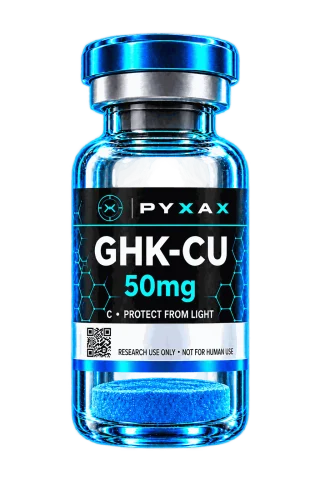
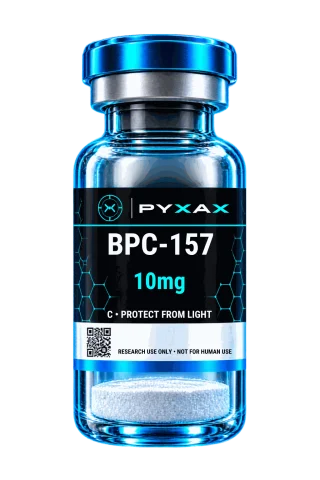
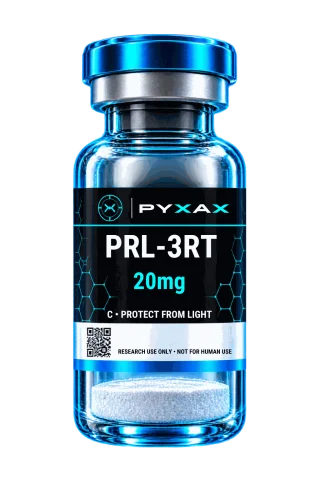
PYXAX uses accredited independent laboratories in its verification network, including ILS Labs, Krause Analytical, and Janoshik. The current per-batch panel covers purity by HPLC, potency against label claim, and identity by LC-MS. A lot-specific COA is published in the COA Library before dispatch and names the laboratory that tested that batch. Endotoxin, heavy-metals, and final-vial sterility screening are not part of the current panel.
Those analytical records describe the reported scope of a research lot. They do not establish that any material is appropriate for human or veterinary use.
All PYXAX compounds are supplied strictly for in-vitro and preclinical laboratory research use only. Not for human consumption. Not for veterinary use. Not for diagnostic procedures. These statements have not been evaluated by the FDA. Researchers are responsible for compliance with all applicable laws and regulations governing the use of research compounds in their jurisdiction.