Few regulatory topics have generated more confusion in the research-compound community this year than the 2026 “peptide reclassification.” Headlines have declared peptides “legal again,” vendors have implied that long-restricted compounds are now cleared, and a great deal of the commentary has blurred two entirely separate regulatory worlds: the compounding-pharmacy framework that governs prescription preparations, and the research-use-only (RUO) framework that governs compounds supplied strictly for laboratory work.
This article is an educational explainer written to separate signal from noise. It covers what actually changed, how the FDA’s Category 1 and Category 2 designations work, which peptides are under review, the current status as of early July 2026 — which is not what many headlines suggest — and, most importantly, why none of this alters the framework under which research compounds are supplied.
This article is educational and regulatory in nature. It is not legal advice, and it makes no claim that any compound is approved or permitted for human use. For in-vitro and preclinical laboratory research use only.
Before Anything Else: Two Separate Frameworks
The single most important thing to understand is that the 2026 developments concern compounding-pharmacy regulation under Section 503A of the Federal Food, Drug, and Cosmetic Act. That framework governs whether a licensed compounding pharmacy may prepare a substance into a preparation for a specific patient with a valid prescription.
Research-use-only supply is a different framework entirely. RUO compounds are sold to qualified laboratories and researchers as materials for in-vitro and preclinical work, explicitly not for human consumption, not as medicines, and not as compounded preparations. Nothing in the 503A compounding review changes what an RUO compound is, how it is labeled, or the fact that it is not intended for human use.
When a headline says a peptide is “becoming legal,” what is actually being discussed — at most — is whether licensed pharmacies may compound it for patients under prescription. That is not the same as FDA drug approval, and it has no bearing on the RUO research market. Keep this distinction in mind throughout.
Section 1 — What Actually Happened in 2026
According to reporting from regulatory and trade outlets including BioPharma Dive, Pharmacy Times, and the Regulatory Affairs Professionals Society (RAPS), the sequence of events in 2026 has been roughly as follows.
On February 27, 2026, Department of Health and Human Services Secretary Robert F. Kennedy Jr. publicly signaled an intent to revisit the restrictive posture the FDA had taken toward a number of peptides used in compounding. Reporting characterized this as a move to shift a group of peptides — described in coverage as roughly 14 of 19 then-restricted substances — out of the more restrictive interim category and back into the category eligible for consideration.
On or around April 15, 2026, the FDA updated its interim 503A bulk drug substances materials, repositioning several peptides and scheduling them for formal evaluation by the Pharmacy Compounding Advisory Committee (PCAC). The FDA subsequently published notice of a two-day PCAC meeting and established a public comment docket.
It is important to frame the February announcement accurately: a statement of intent from HHS leadership is a policy signal, not a completed regulatory action. The actual mechanism — evaluation of bulk drug substances for the 503A list — runs through a defined administrative process that, as of this writing, is still underway.
Section 2 — The Category 1 / Category 2 Framework
The “Category 1” and “Category 2” labels come from the FDA’s interim policy for compounding using bulk drug substances that are still under evaluation for the 503A Bulks List. While the agency works through the formal evaluation, it sorts nominated substances into interim buckets:
Category 1 covers bulk drug substances under evaluation for which the FDA has not identified significant safety concerns and for which the available information does not otherwise raise a barrier to interim use. In practical terms, substances in this interim category may be used by compounders during the evaluation window, subject to the other conditions of 503A.
Category 2 covers bulk drug substances that raise significant safety risks or other concerns such that the FDA does not intend to permit their use in compounding during the evaluation. A Category 2 placement is effectively a “not during review” designation.
Two points are frequently lost in popular coverage. First, neither category is a final answer — both are interim placements while the substance awaits formal evaluation. Second, and critically, being in Category 1 is not the same as being on the 503A Bulks List. Category 1 is a holding status; formal inclusion on the list is a separate, later determination that follows PCAC review and FDA rulemaking. Movement from Category 2 to Category 1 changes a substance’s interim treatment during review; it does not by itself place the substance on the permanent list, and it does not make the substance an approved drug.
Section 3 — Which Peptides Are Under Review
Per the FDA’s official advisory committee notice, the Pharmacy Compounding Advisory Committee is scheduled to meet on July 23–24, 2026 at the FDA White Oak Campus to discuss bulk drug substances being considered for inclusion on the 503A Bulks List. The published agenda identifies the substances and the specific uses the FDA reviewed:
July 23, 2026:
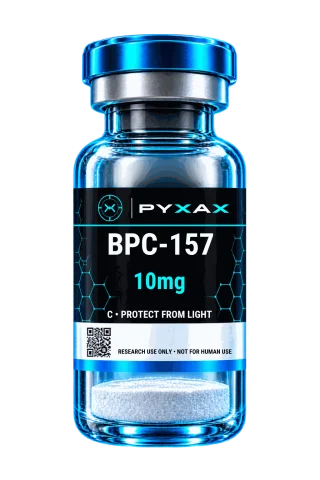
- BPC-157 (free base) and BPC-157 acetate — use evaluated: ulcerative colitis
- KPV (free base) and KPV acetate — use evaluated: wound healing and inflammatory conditions
- TB-500 (free base) and TB-500 acetate — use evaluated: wound healing
- MOTS-c (free base) and MOTS-c acetate — nominated uses included obesity and osteoporosis; FDA stated it lacked sufficient information to evaluate those uses (FDA MOTS-c briefing document, 2026)
July 24, 2026:
- Emideltide / DSIP (free base) and acetate — uses evaluated: opioid withdrawal, chronic insomnia, narcolepsy
- Semax (free base) and Semax acetate — uses evaluated: cerebral ischemia, migraine, trigeminal neuralgia
- Epitalon (free base) and Epitalon acetate — use evaluated: insomnia
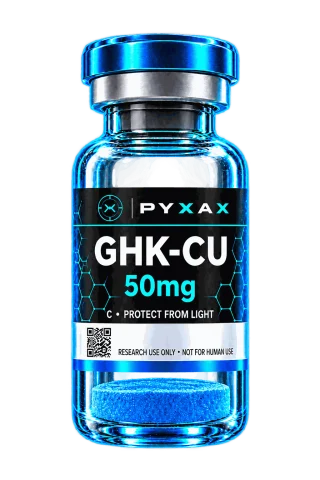
The FDA published individual briefing documents for each substance ahead of the meeting. Separately, reporting from RAPS and others indicates the FDA intends to convene the committee again before the end of February 2027 to review an additional group of peptides — described in coverage as including GHK-Cu, Melanotan II, Cathelicidin (LL-37), Dihexa acetate, and PEG-MGF.
Note that the “uses evaluated” listed above are the therapeutic indications the FDA assessed in its compounding review. They describe the scope of the agency’s evaluation, not established outcomes, and they are not applicable to research-use supply, which makes no therapeutic claims of any kind.
Section 4 — Current Status: What Has and Has Not Happened
This is where careful reading matters most. As of early July 2026:
The PCAC review has not yet occurred. The meeting is scheduled for July 23–24, 2026. Nothing has been decided at the committee level as of this writing.
Advisory committee recommendations are non-binding. The FDA’s own notice states that advisory committees make non-binding recommendations, which the agency generally follows but is not legally required to adopt. A favorable committee vote would be a recommendation, not a final rule.
Formal inclusion on the 503A Bulks List requires FDA rulemaking beyond the meeting. Even a positive PCAC recommendation is followed by FDA determination and, ultimately, Federal Register rulemaking. The public docket for the meeting (Docket No. FDA-2025-N-6895) was open for comment, with comments received by July 9, 2026 provided to the committee and the docket closing July 22, 2026.
In short: a review is scheduled, briefing materials are published, and a comment process is running — but no peptide in this group has been finally added to the 503A Bulks List through this process, and the reclassification has not been formally completed. Anyone stating otherwise is describing an outcome that has not yet been determined.
Section 5 — What This Means (and Does Not Mean) for Researchers
For laboratory researchers sourcing compounds for in-vitro and preclinical work, the practical takeaways are narrow and worth stating plainly.
It does not make any compound “legal for human use.” The 503A framework concerns pharmacy compounding under prescription, not FDA drug approval and not research supply. No development described here converts a research compound into a human-use product.
It does not change RUO status or labeling. Research compounds are supplied for laboratory use only, not for human consumption, veterinary use, or diagnostic procedures. That is a function of how the material is intended, labeled, and sold — and it is unaffected by the compounding-pharmacy review.
It does not lower the bar on verification. If anything, heightened regulatory attention makes documentation more important, not less. The questions a researcher should ask about any lot — who tested it, by what methods, and whether the result is independently verifiable — are the same before and after any regulatory development.
The most useful posture is to treat the 503A review as relevant context for the broader peptide landscape while recognizing that it operates in a lane that does not touch RUO research supply.
Section 6 — How to Read Regulatory Claims
Because this topic is being used in marketing, a few source-evaluation habits are worth applying whenever you encounter a regulatory claim about peptides:
Trace it to a primary source. FDA advisory committee notices, briefing documents, and Federal Register entries are public. If a claim cannot be traced to an FDA page, a Federal Register document, or a reputable regulatory outlet (RAPS, established FDA-focused law firm analyses), treat it as unverified.
Distinguish “scheduled” from “decided.” A meeting on the calendar is not a decision. A committee recommendation is not a final rule. Watch the verbs.
Distinguish frameworks. “Cleared for compounding” is not “approved as a drug,” and neither is “available for research use only.” Claims that collapse these categories are a reliable signal of low-quality information.
Be wary of “legal now” language. Any vendor using a regulatory headline to imply human-use legitimacy for a research compound is mixing frameworks in a way the regulations themselves do not.
Section 7 — The PYXAX Position and Verification Standard
PYXAX supplies research compounds strictly for in-vitro and preclinical laboratory use. Our position on the 2026 compounding developments is straightforward: they concern a pharmacy-compounding framework that is separate from research supply, they are not yet finalized, and they do not change how research compounds are labeled, intended, or verified.
What does not change — regardless of any regulatory outcome — is the requirement that each dispatched lot have its lot-specific COA published before dispatch.
Testing — accredited independent laboratories (ISO 17025):
- Chromatographic purity by HPLC
- Molecular identity by LC-MS
- Endotoxin (USP 85-style LAL method)
- Heavy metals by ICP-MS
- Lot-specific COA published in the PYXAX COA Library before dispatch
Lot-specific documentation. Every dispatched production lot receives its own batch number, matching the COA in the PYXAX COA Library, which researchers can review before dispatch. Janoshik results, where commissioned, are publicly searchable by batch number. Founding batches were verified by Krause Analytical.
View COA Library →
Read The PYXAX Standard →
Browse Research Compounds →
Further reference: the FDA’s advisory committee page for the July 23–24, 2026 PCAC meeting and its published briefing documents, the meeting docket (FDA-2025-N-6895) on Regulations.gov, and the Federal Register are the authoritative sources for the status of this process.
All PYXAX compounds are supplied strictly for in-vitro and preclinical laboratory research use only. Not for human consumption. Not for veterinary use. Not for diagnostic procedures. These statements have not been evaluated by the FDA. Researchers are responsible for compliance with all applicable laws and regulations governing the use of research compounds in their jurisdiction.